bulk custom sweatshirts have become an efficient strategy for enterprises to enhance brand influence and control operating costs. According to the analysis of the industry supply chain, the unit price of ordering more than 500 pure cotton sweatshirts at one time can be reduced by 40% compared with retail procurement. Moreover, through large-scale production to spread the fixed costs, enterprises can compress the processing cost per piece to within 15 yuan. Take the employee commemorative hoodie project launched by a well-known technology company in 2022 as an example. Ordering 3,000 pieces in bulk kept the total cost within 80,000 yuan, saving 62% of the budget compared to retail procurement. At the same time, through local production, the delivery cycle was shortened from the conventional 30 days to 12 days.
In terms of brand communication, the advertising value of custom-made sweatshirts is significant. Market research shows that a hoodie printed with a company logo can generate an average of 300 brand exposures. If employees wear it every day, it can create more than 50,000 visual contacts within half a year. Coca-Cola Company once launched a winter promotion by customizing 200,000 themed sweatshirts in bulk. Subsequent research showed that this measure increased brand awareness by 18% and the customer repurchase rate by 7.3%. More importantly, as a high-frequency wearable item, the advertising decline period of sweatshirts can be more than three times that of traditional promotional materials.
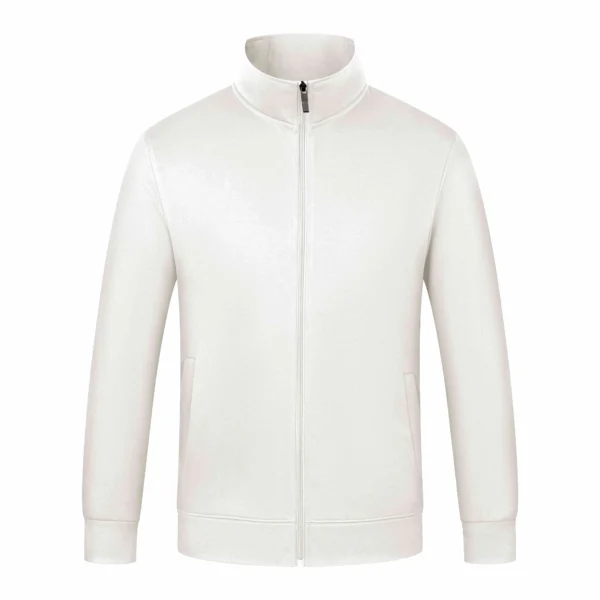 From the perspective of supply chain stability, batch customization can effectively cope with fluctuations in market demand. In the winter of 2023, the sportswear brand Under Armour, by predicting climate trends, produced 500,000 thickened sweatshirts in bulk in advance, taking the lead in capturing a 27% market share when the cold wave hit. The data-driven inventory management system it adopts has increased the warehouse turnover rate to 2.8 times per month, which is 40% higher than the industry average. This predictive batch production model keeps the inventory overstock rate below 5%, which is far lower than the average overstock rate of 15% in the fashion industry.
Long-term financial benefits are also worthy of attention. According to the return on investment model of the retail industry, the marginal benefit of mass-customized sweatshirts continues to grow as the usage scenarios expand. After a certain chain catering enterprise uniformly customized hoodie uniforms for the employees of 200 stores, not only did the annual clothing procurement cost decrease by 35%, but also the customer satisfaction score increased by 12 points due to the unified brand image. What is more notable is that the average service life of these sweatshirts is 18 months, and their daily usage cost is only 0.6 yuan, making them one of the most liquid brand assets of the enterprise.
From the perspective of supply chain stability, batch customization can effectively cope with fluctuations in market demand. In the winter of 2023, the sportswear brand Under Armour, by predicting climate trends, produced 500,000 thickened sweatshirts in bulk in advance, taking the lead in capturing a 27% market share when the cold wave hit. The data-driven inventory management system it adopts has increased the warehouse turnover rate to 2.8 times per month, which is 40% higher than the industry average. This predictive batch production model keeps the inventory overstock rate below 5%, which is far lower than the average overstock rate of 15% in the fashion industry.
Long-term financial benefits are also worthy of attention. According to the return on investment model of the retail industry, the marginal benefit of mass-customized sweatshirts continues to grow as the usage scenarios expand. After a certain chain catering enterprise uniformly customized hoodie uniforms for the employees of 200 stores, not only did the annual clothing procurement cost decrease by 35%, but also the customer satisfaction score increased by 12 points due to the unified brand image. What is more notable is that the average service life of these sweatshirts is 18 months, and their daily usage cost is only 0.6 yuan, making them one of the most liquid brand assets of the enterprise.
From the perspective of supply chain stability, batch customization can effectively cope with fluctuations in market demand. In the winter of 2023, the sportswear brand Under Armour, by predicting climate trends, produced 500,000 thickened sweatshirts in bulk in advance, taking the lead in capturing a 27% market share when the cold wave hit. The data-driven inventory management system it adopts has increased the warehouse turnover rate to 2.8 times per month, which is 40% higher than the industry average. This predictive batch production model keeps the inventory overstock rate below 5%, which is far lower than the average overstock rate of 15% in the fashion industry.
Long-term financial benefits are also worthy of attention. According to the return on investment model of the retail industry, the marginal benefit of mass-customized sweatshirts continues to grow as the usage scenarios expand. After a certain chain catering enterprise uniformly customized hoodie uniforms for the employees of 200 stores, not only did the annual clothing procurement cost decrease by 35%, but also the customer satisfaction score increased by 12 points due to the unified brand image. What is more notable is that the average service life of these sweatshirts is 18 months, and their daily usage cost is only 0.6 yuan, making them one of the most liquid brand assets of the enterprise.